
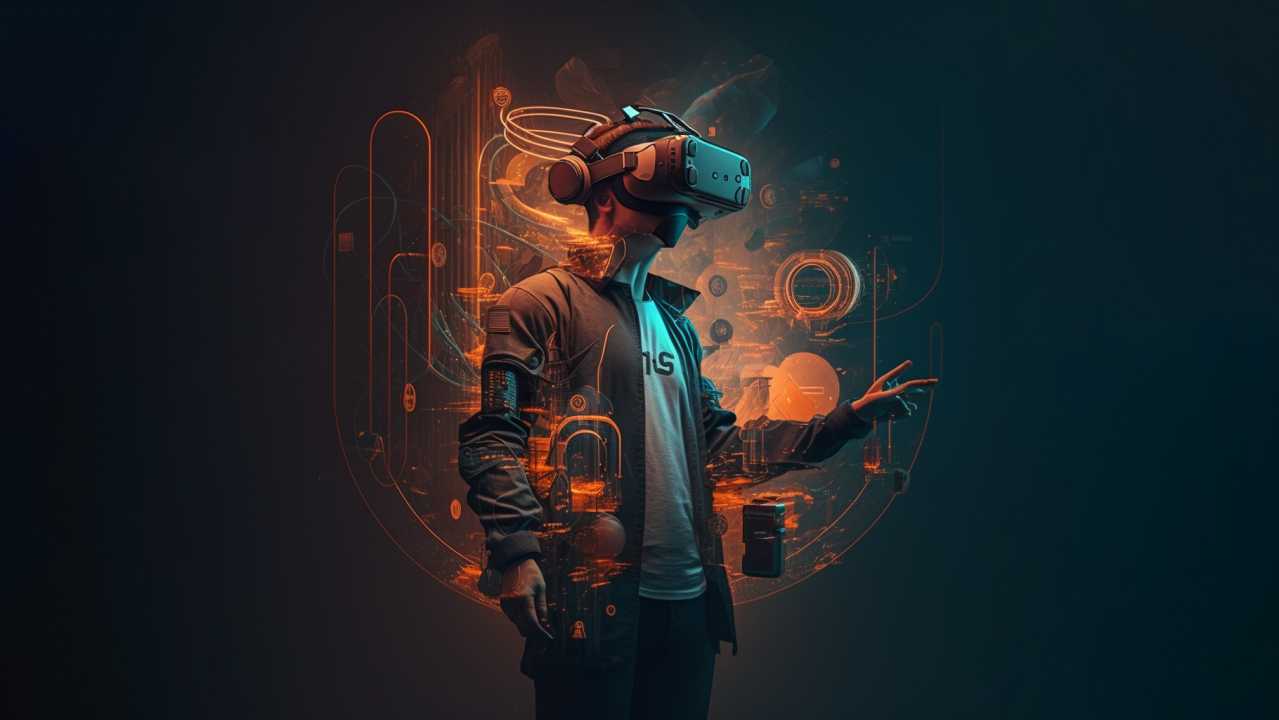
AR and VR in Enterprise
In the realm of modern business, staying ahead of the curve often means embracing innovative technologies that redefine traditional approaches. Augmented Reality (AR) and Virtual Reality (VR) have emerged as transformative tools, offering immersive experiences that extend far beyond entertainment. In the enterprise landscape, AR and VR are revolutionizing operations, training, customer engagement, and product development. Let’s dive into how these technologies are reshaping the way businesses operate and interact with their stakeholders.
Enhanced Training and Skill Development
One of the most compelling applications of AR and VR in the enterprise is in training and skill development. Traditional training methods often fall short in providing hands-on experiences or replicating real-world scenarios. With AR and VR, employees can undergo immersive training sessions that simulate various environments and scenarios. From complex machinery operation to emergency response protocols, these technologies enable employees to learn by doing, leading to improved retention and proficiency.
Virtual Prototyping and Product Development
Innovation lies at the heart of every successful enterprise, and AR and VR are facilitating the process of product development like never before. Through virtual prototyping, designers and engineers can create and iterate upon product designs in a digital environment, significantly reducing time-to-market and costs associated with physical prototypes. Stakeholders can interact with virtual models, assess design features, and provide feedback in real-time, fostering collaboration and innovation across teams.
Elevated Customer Engagement
AR and VR are revolutionizing the way businesses engage with their customers, offering immersive experiences that drive brand loyalty and satisfaction. Retailers can leverage AR technology to enable virtual try-on experiences, allowing customers to visualize products in their own space before making a purchase decision. Similarly, VR-powered virtual tours enable real estate agencies to showcase properties to potential buyers regardless of their physical location, offering a lifelike experience that traditional photographs or videos cannot match.

Streamlined Maintenance and Repair
For enterprises operating in industries such as manufacturing, aviation, and healthcare, maintenance and repair operations are critical to ensuring operational efficiency and safety. AR-enabled smart glasses or mobile devices can provide technicians with real-time access to maintenance procedures, schematics, and diagnostic information overlaid onto the physical environment. This hands-free approach reduces downtime, minimizes errors, and enhances productivity, ultimately driving bottom-line results.
Future Outlook
As technology continues to evolve, the potential applications of AR and VR in enterprise are virtually limitless. From remote collaboration and virtual meetings to data visualization and employee onboarding, these technologies are poised to become integral components of the digital workplace. As businesses navigate an increasingly complex and competitive landscape, embracing AR and VR represents not only a strategic advantage but also a commitment to innovation and excellence.
In conclusion, Augmented Reality (AR) and Virtual Reality (VR) are transforming the enterprise landscape, offering unprecedented opportunities for innovation, efficiency, and engagement. By harnessing the power of these immersive technologies, businesses can unlock new possibilities, streamline operations, and deliver exceptional experiences to employees and customers alike. As we look towards the future, it’s clear that the potential of AR and VR in enterprise is limited only by our imagination